Brazilian Manufacturing Excellence: Where Giants Are Born, and Other Giants Are Reborn
- Tony Gunn
- 8 hours ago
- 6 min read

By Tony Gunn | The WorldWide Machinist
Ask most people what a world-class manufacturing facility looks like, and they'll picture one thing. One product. One specialty. One niche done extremely well.
Then you walk into Guaratinguetá, Brazil, and that idea falls apart.
Liebherr Brazil is an enormous industrial ecosystem where construction machinery, cranes, aerospace components, wind-energy technology, gear manufacturing, automation, remanufacturing and customer support all live under one very large roof. And what an awesome experience it was.
One Roof, Five Industries
Liebherr's Brazilian story began in 1974, when the family-owned company established Liebherr Brasil Ltda. in Guaratinguetá.
One of the most impressive capabilities in Guaratinguetá is the production of large-diameter bearings for wind turbines. Liebherr Group added approximately 6,000 square meters of production space for this operation, installing equipment capable of machining and inductively hardening bearing raceways, milling slewing-ring gears, and applying specialized surface coatings. These bearings can measure up to an enormous 4,500 millimeters in diameter. They're used to adjust the blades and yaw position of wind turbines, helping those giant machines turn wind into usable energy.
The company is currently expanding its Guaratinguetá aerospace facility by another 8,000 square meters. The new operation is expected to be fully functional in 2027, supported by approximately €45 million in investment over ten years. Production transferred from Liebherr's European aerospace facilities will include additional machining and surface treatment of high-precision aluminum and steel aircraft components. The expansion is expected to create hundreds of new jobs — a powerful vote of confidence in Brazilian manufacturing talent.
Guaratinguetá is also home to Liebherr's gear technology and automation activities. The local team supports gear hobbing, shaping and grinding machines, gear-measurement technology, industrial automation and gantry systems. Liebherr says nearly 100 gear-manufacturing machines have been sold by the Brazilian operation, with local specialists providing installation, maintenance, repair, and technical support.
This is a highly vertically integrated operation, where machining, fabrication, heat treatment, coating, assembly, testing, remanufacturing, service and application knowledge can exist within the same industrial community. Shared departments — engineering, IT, human resources, marketing — connect the divisions, while decades of local knowledge allow Liebherr to adapt global technology to Brazilian and South American requirements.
Globally, Liebherr now employs more than 50,000 people, operates over 150 companies in more than 50 countries, and remains controlled by the Liebherr family. Yet Guaratinguetá doesn't feel like some forgotten pin pushed into a corporate world map. It feels like one of the Group's major industrial anchors — a place trusted to manufacture everything from earthmoving equipment to components responsible for keeping aircraft safely in the sky.


Not Tossed Over the Factory Wall
Two countries, thousands of kilometers apart, working together like perfectly meshing gears.
At the Guaratinguetá facility, machines and major assemblies sent from Germany are assembled locally by Liebherr's Brazilian team. The company performs local assembly of gear-cutting machines, which means Brazilian customers receive German-developed technology combined with Brazilian manufacturing knowledge, installation capability, and long-term support.
The Brazilian technicians are not simply tightening the final four bolts and applying a shiny Liebherr badge. They're experienced in machine assembly, commissioning, maintenance, diagnostics, repair, and production support. They regularly travel to Kempten for comprehensive technical training, while machine acceptance tests and complex project coordination connect the German and Brazilian teams throughout the process.
Since Liebherr Gear Technology and Automation Systems first entered South America through sales partners and established direct sales and service operations at Liebherr Brasil, the Brazilian subsidiary continues to shape gear making in South America. The Guaratinguetá team provides spare parts, preventative maintenance, repairs, technical service, process support, and complete machine overhauls through Liebherr's REMAN program. Older machines can be inspected, disassembled, and rebuilt according to the customer's needs — the work can preserve the machine's existing condition, restore it to its original delivery quality, or upgrade major controls and systems to current technology.
Shipping a massive machine tool back across the Atlantic for every major intervention is expensive, slow, and about as convenient as mailing your house to Germany because the kitchen faucet is leaking. Local assembly, service, and remanufacturing reduce transportation, simplify communication, and give manufacturers access to trained Liebherr technicians who understand both the machines and the realities of producing in Brazil.
What I saw at Liebherr Brasil was the strength of a truly international manufacturing system. German engineering is not being tossed over the factory wall with an instruction manual and a "boa sorte."
This is German precision and Brazilian capability meshing together.


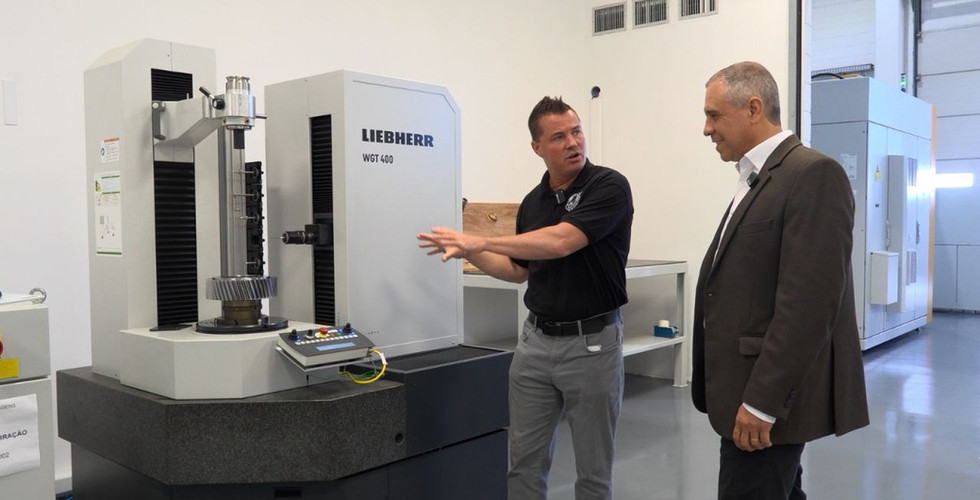


Where Giants Are Born, and Other Giants Are Reborn
At Liebherr Group Brasil, one side of the factory manufactures enormous bearings that help wind turbines turn toward the sky, while another side rebuilds mobile and crawler cranes capable of lifting pieces of that sky into place.
Inside a dedicated 6,000-square-meter production area, Liebherr manufactures large-diameter slewing bearings measuring up to an extraordinary 4,500 millimeters — nearly 15 feet across. Calling these things "bearings" feels almost disrespectful. These aren't parts you hold between two fingers while searching for the correct socket. They're precision-engineered steel halos large enough to make an ordinary bearing look like pocket change.
Pitch bearings allow turbine blades to rotate and change their angle to the wind. Yaw bearings help turn the nacelle so the entire turbine can face changing wind direction. They're the enormous mechanical shoulders allowing a wind turbine to shrug, turn, and negotiate with Mother Nature.
The Brazilian facility has the equipment and knowledge required to machine bearing raceways, inductively harden critical running surfaces, mill the gear teeth of the slewing rings, and apply protective surface coatings. Liebherr's Brazilian employees were trained through the company's bearing operations in Biberach, Germany, and the finished products are manufactured to the same Liebherr quality standards used at those locations.
But just down the industrial road, another group of giants is receiving a second life.
Liebherr Brasil has offered used-crane services for more than three decades, supported by a modern repair workshop dedicated to mobile and crawler cranes. These cranes can arrive with years of lifting behind them, faded paint, worn components, and enough jobsite stories to fill several construction-site lunchrooms. Liebherr's technicians inspect them, repair them, update them, and prepare them to return to work — repainted, upgraded to current safety standards, sometimes reconfigured with new winches or booms for a completely different job than the one they started on. The result is a used crane rebuilt with original-manufacturer knowledge and, depending on the work performed, offered with a warranty.


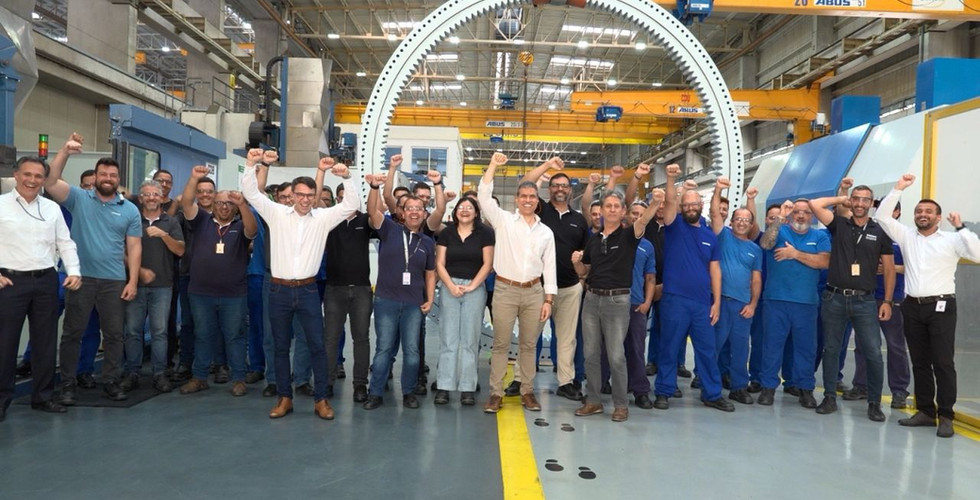






The Yellow Giants of Guaratinguetá
The current Brazilian-built portfolio includes hydraulic excavators with operating weights from approximately 36 to 62 tons, along with wheel loaders offering tipping loads from roughly 8 to 20 tons. Liebherr also sells and supports crawler tractors weighing between 20 and 75 tons and rail-mounted excavators for specialized applications. They work in quarries, mines, aggregate operations, infrastructure projects, and major construction sites where productivity is counted in tons per hour and downtime is measured in money disappearing through a trapdoor.
Liebherr's complete global mining portfolio is enormous. Mining excavators weighing approximately 100 to 800 tons, diesel-electric and battery-electric haul trucks with payload capacities between 100 and 400 tons, and mining dozers in the 70-ton class. They also provide complete aftermarket support for these machines throughout the country — field service, technical training, maintenance contracts, parts availability, and repairs from advanced service locations across Brazil.
A mining machine is not truly judged when the paint is shiny and the hour meter still looks unemployed. It's judged years later, when it's been punched in the face by rock every day and still wakes up ready for the next shift.
If earthmoving prepares the ground and mining extracts the materials, concrete technology transforms those materials into civilization. Liebherr Brasil is the largest manufacturer of truck mixers in Latin America and the Brazilian market leader. Its locally supported concrete portfolio covers the full production chain — batching, mixing, transportation, pumping, and recycling.
Guaratinguetá manufactures truck-mounted concrete mixers with nominal capacities from 5 to 12 cubic meters, along with truck-mounted concrete pumps, stationary and mobile batching plants, and concrete-recycling systems. What makes Liebherr Brasil especially powerful is that it connects manufacturing with engineering, parts, training, field service, maintenance contracts, and factory-backed support. An excavator, wheel loader, mining machine, or concrete mixer is only productive when it's operating.





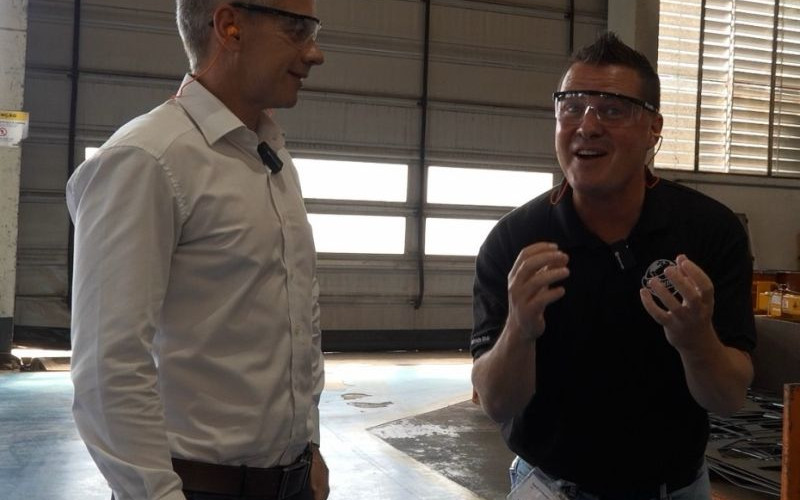
One Facility, One Country's Worth of Ambition
Bearings large enough to swallow pocket change whole. Cranes rebuilt with a warranty after years of getting beat up on jobsites. Mining machines judged not on delivery day but on the ten-thousandth day. Aircraft components machined to the same standard as Europe, growing at a €45 million clip through 2027.
Inside Guaratinguetá, Brazilian teams manufacture earthmoving machines, concrete equipment, and globally important mining components. Outside the factory, Liebherr specialists support that same equipment working in mines, quarries, cities, and infrastructure projects across one of the largest and most demanding countries on Earth.
Where giants are born. And other giants are reborn.
Full videos are dropping soon on The WorldWide Machinist channels.
Subscribe, follow, and stay close — these ones are going to remind you why American manufacturing still matters.


Comments